How long does it take to make Homemade Pita?
Bake in the oven at full heat on an upside-down baking sheet preheated in advance, just 3–5 minutes.
2 hrTotal
41 minActive time
1 hr 19 minSetting
Step by Step
| # | What to do | How long |
|---|
| 1 | Mix the flour, yeast, sugar and salt in a large bowl | 1 min |
| 2 | Add the lukewarm water and olive oil and Knead about 10 minutes | 10 min |
| 3 | Cover and Let rise about an hour in a warm place | 1 hr |
| 4 | Preheat the oven to 250°C (480°F), with an upside-down baking sheet inside, for at least half an hour | 30 min |
| 5 | Divide the dough into 10 balls and roll each ball into a circle about ½ cm thick | — |
| 6 | Cover the rounds with a towel and let rest 15 minutes | 15 min |
| 7 | Bake on the hot baking sheet, 3–4 pitas at a time, 3–5 minutes | 4 min |
| 8 | Wrap immediately in a towel, so the pitas stay soft | — |
How to Tell It's Done
- until the dough is smooth, pliable and doesn't stick to your hands
- until the dough doubles in size
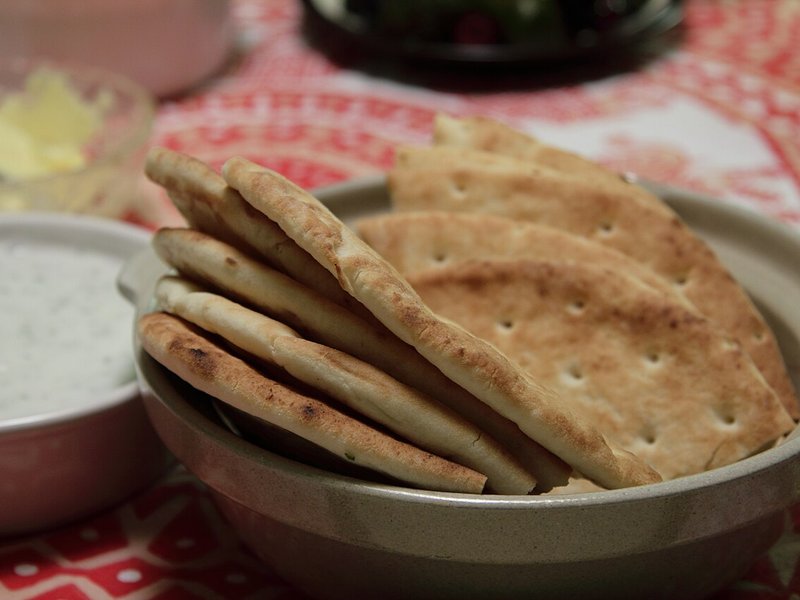
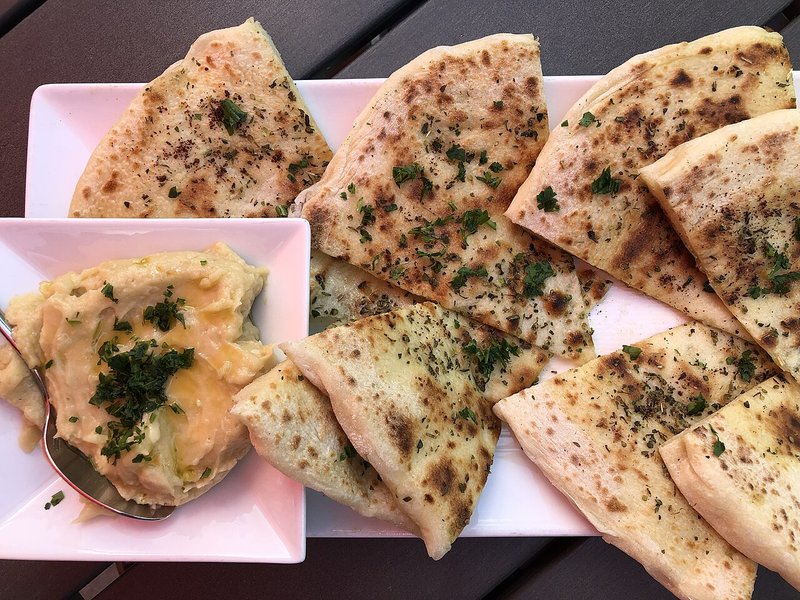
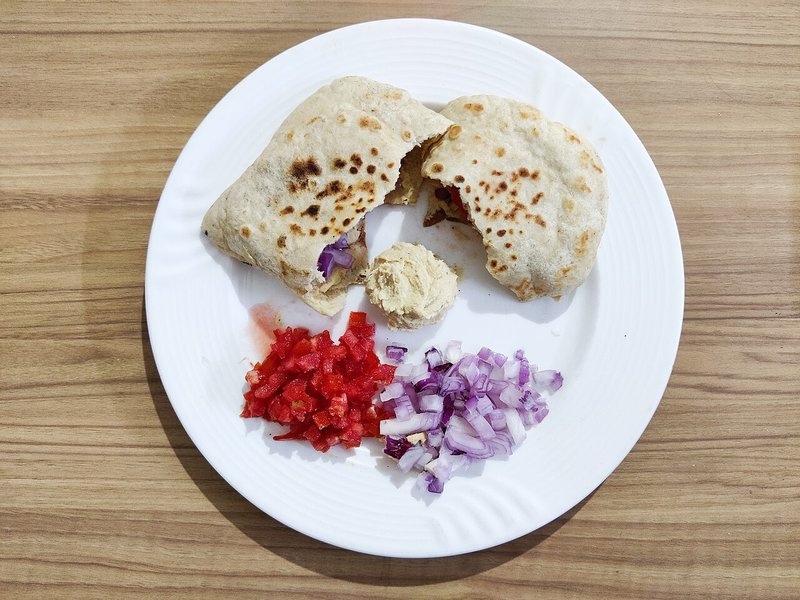
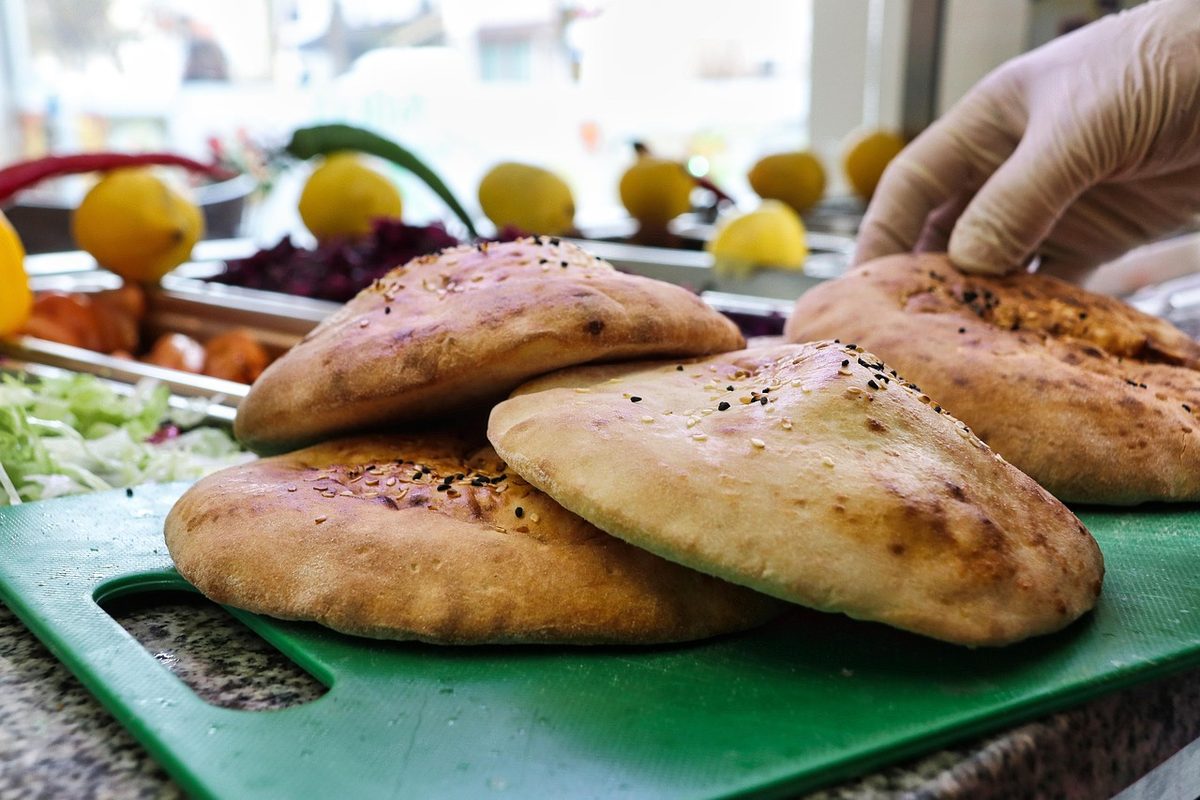
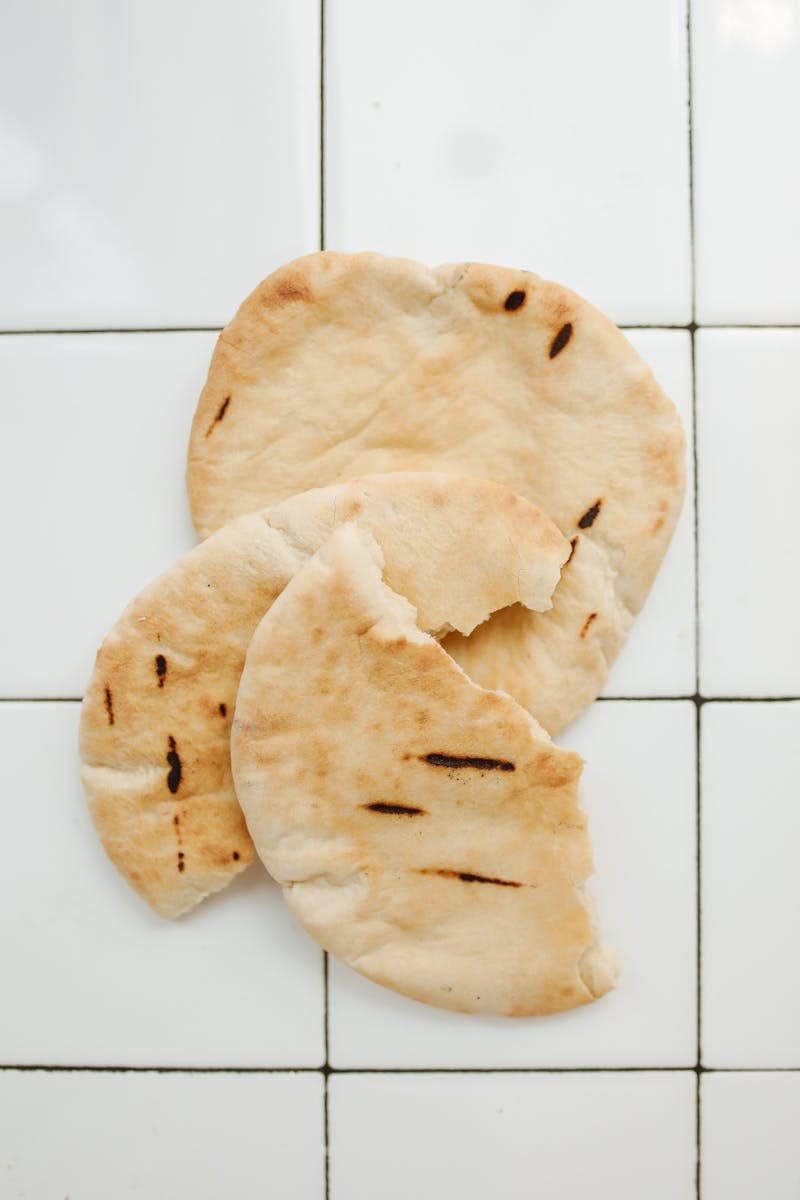
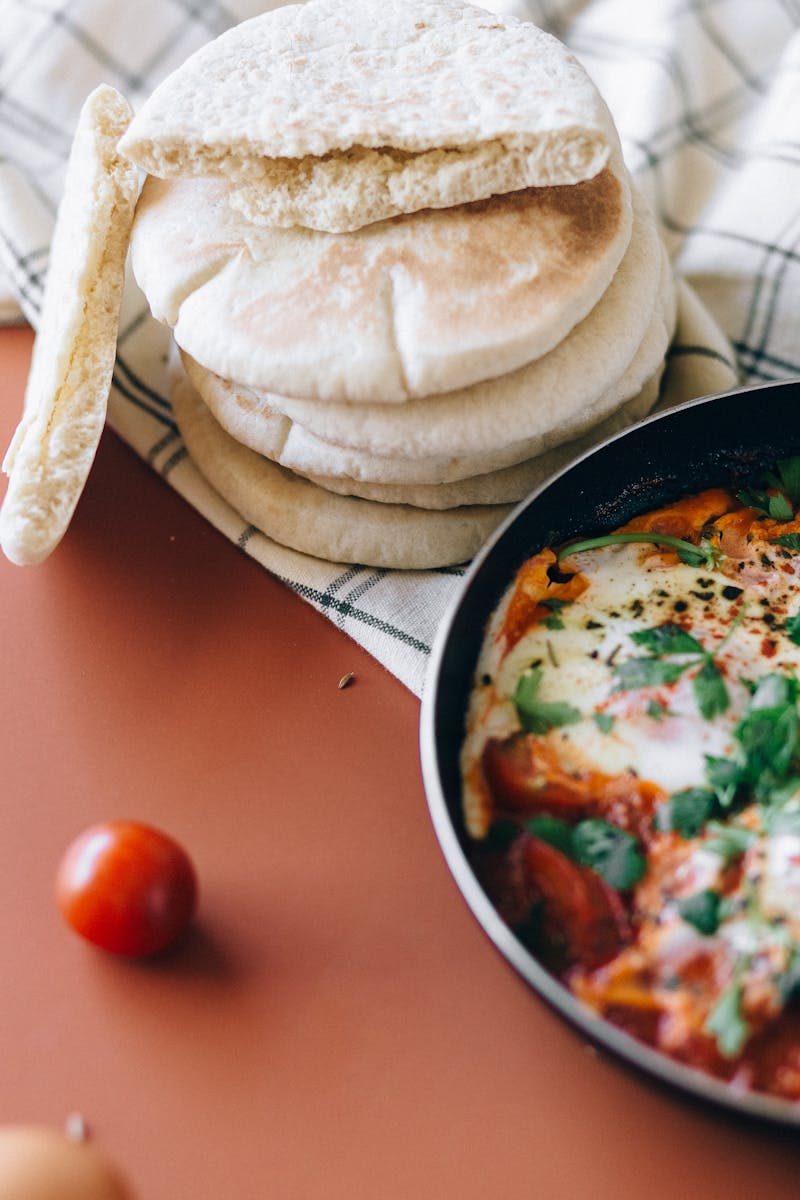
- until the pitas puff into a pocket and take on a little color
Tips
- Let rise in a warm, draft-free spot. The dough is ready when it has doubled, and a gentle finger press leaves a dent that fills back slowly; if it springs right back, wait longer.
- Put things in the oven only once it's reached temperature, after the heating light has gone off: an oven that hasn't reached temperature changes baking times, and the bake burns outside or stays underbaked.
- Dough that springs back needs rest: cover the balls for 10 minutes and the gluten relaxes.
- Full heat and a scorching-hot baking sheet are what make the pocket: in an oven that isn't hot enough, the pita bakes flat.
Common Mistakes
- For yeast dough, use the windowpane test: a small piece stretches into a thin, translucent sheet without tearing, and that's the sign the kneading is done. Add flour only by the tablespoon, and only if the dough is still sticky after a few minutes: too much flour makes a tough dough.
- Don't roll too thin: in a round half a centimeter thick or more, the steam in the dough puffs it into a pocket; a round that's too thin dries into a cracker.
- Check by the cue (until…), not just the clock: every oven bakes a little differently.
More Ways
- Divide the dough into 80–90 g balls.
- About 600 ml of water per kilo of flour: pita dough is wetter and softer than bread dough.
The full recipe: Homemade Pita →
Recipes with Homemade Pita
All questions