What's the difference between black and green olives?
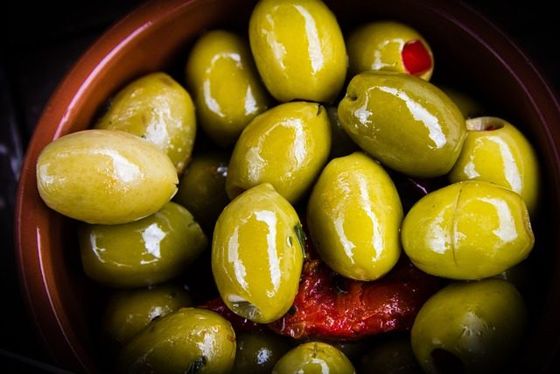
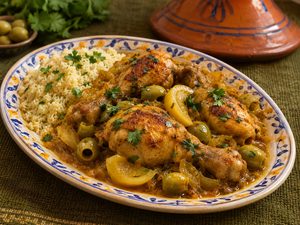
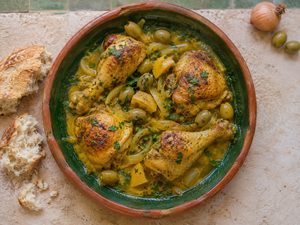
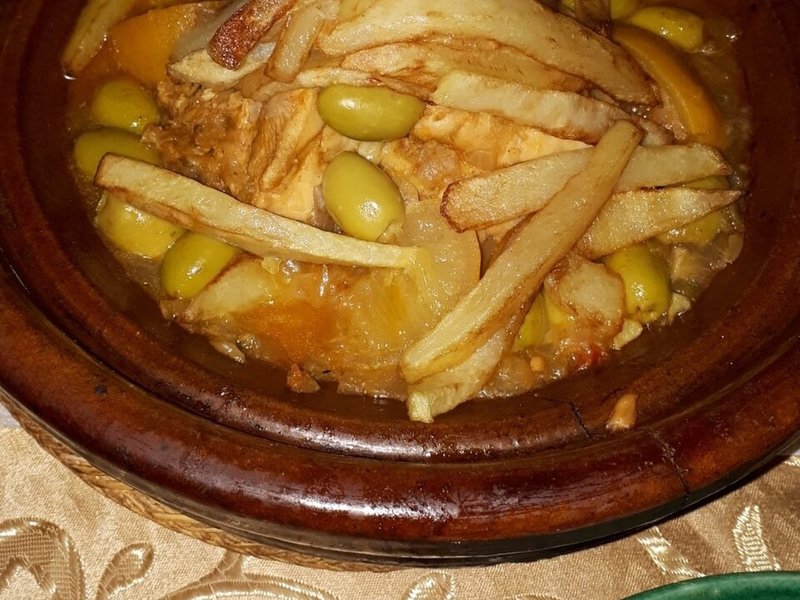
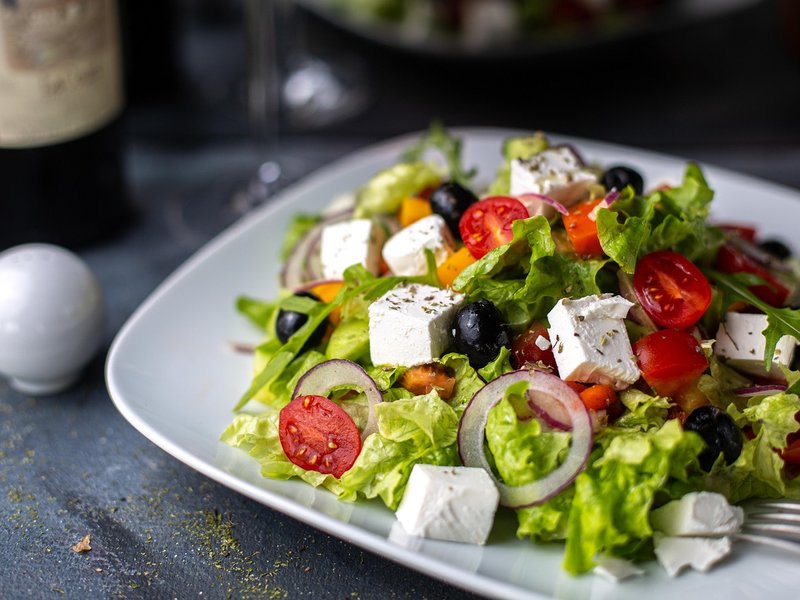
Green olives and black olives are the same fruit at different stages: green ones are picked before they ripen, and black ones ripen on the tree or are darkened in the curing, like most canned black olives. Green olives are firmer, a little sharp and bitter and usually saltier, so they suit cooking in chicken and fish dishes, pickles and salads with a strong taste. Black olives are softer and milder, common in salads, pasta, on pizza and in pastries. In most dishes one can replace the other, but the taste will change: green ones give a sharper, saltier dish, and black ones a softer, milder one.
By the numbers: green olives has more fat (15 g per 100 g, against 9.5 in black olives); green olives: saltier (1,556 mg of sodium per 100 g, against 735). At Afoona black olives appears mostly in Salads, and green olives in Chicken. Afoona's substitutes table has no direct swap between them.
Per 100 g
black olives
green olives
Calories
105
145
Fat
9.5 g
15 g
Protein
0.9 g
1 g
Carbohydrates
3.1 g
0.5 g
Sodium (saltiness)
735 mg
1,556 mg
A cup weighs
134 g
147 g
A tablespoon weighs
8.4 g
8.4 g
Recipes at Afoona
75
56
Mostly in…
Salads (37%), Pasta & Rice (28%), Breads & Pastries (11%)
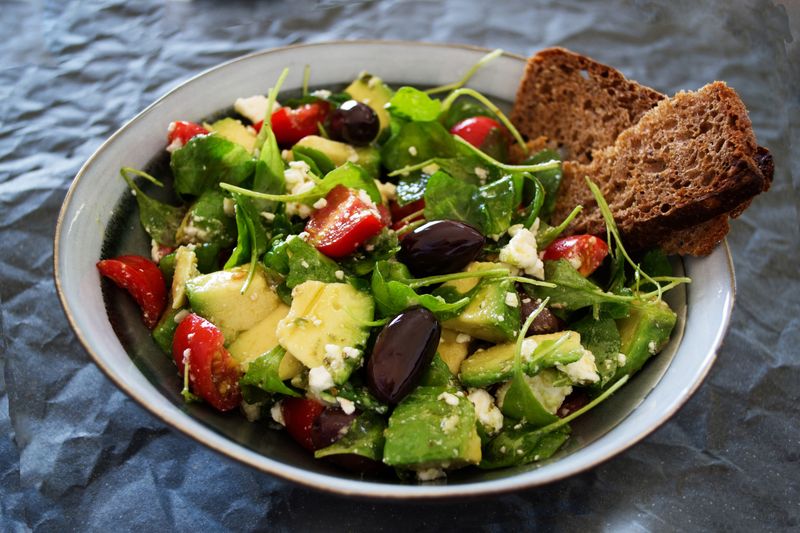
Creamy avocado, salty feta and black olives seasoned with lemon and oregano. A salad ready in 15 minutes that also works as a light summer meal with pita.
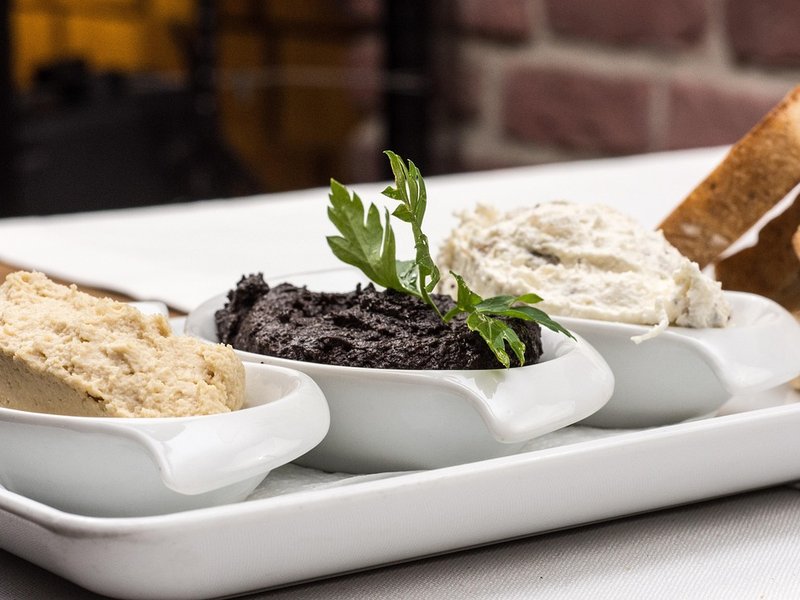
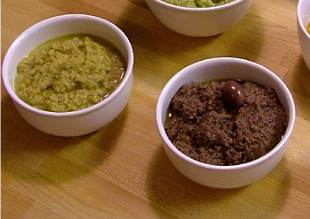
Black olives, capers, anchovies and garlic pulsed briefly with mustard, lemon and olive oil into a coarse, salty spread, as in Provence. Spread on toasted bread or serve alongside cheeses.
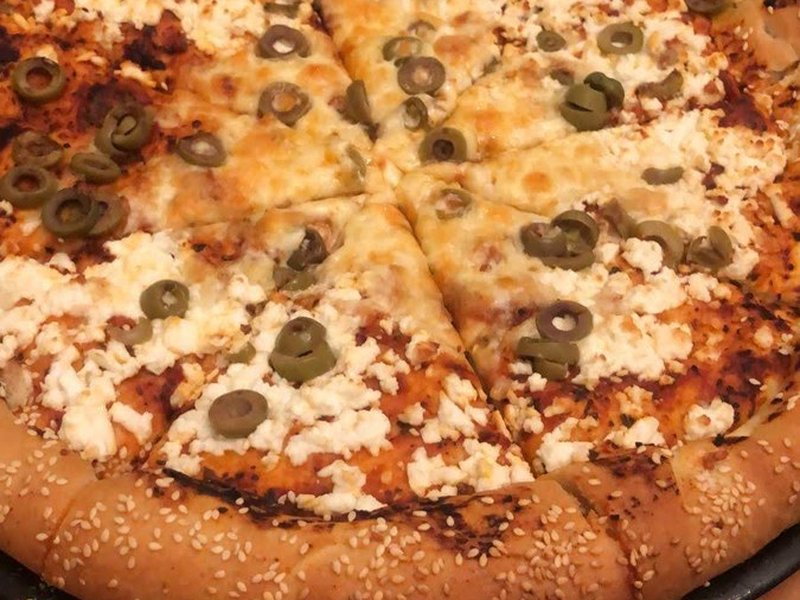
A homemade sheet pan pizza with a relatively thick, soft crust, edges rolled in sesame and a layer of mozzarella and crumbled Bulgarian cheese that browns in the oven. The green olives give a salty tang against the cheeses.
 🧊 In the fridge📒 Notebook
 Afoona


 black olives: nutrition, conversions and substitutes