💡Fat added only after the gluten has developed doesn't stop it from stretching: the dough comes out smooth and soft, not sticky.
💡For yeast dough, use the windowpane test: a small piece stretches into a thin, translucent sheet without tearing, and that's the sign the kneading is done. Add flour only by the tablespoon, and only if the dough is still sticky after a few minutes: too much flour makes a tough dough.
3
Cover and Let rise 1½ hours in a warm place, until the dough doubles in size.
💡Let rise in a warm, draft-free spot. The dough is ready when it has doubled, and a gentle finger press leaves a dent that fills back slowly; if it springs right back, wait longer.
To assemble
4
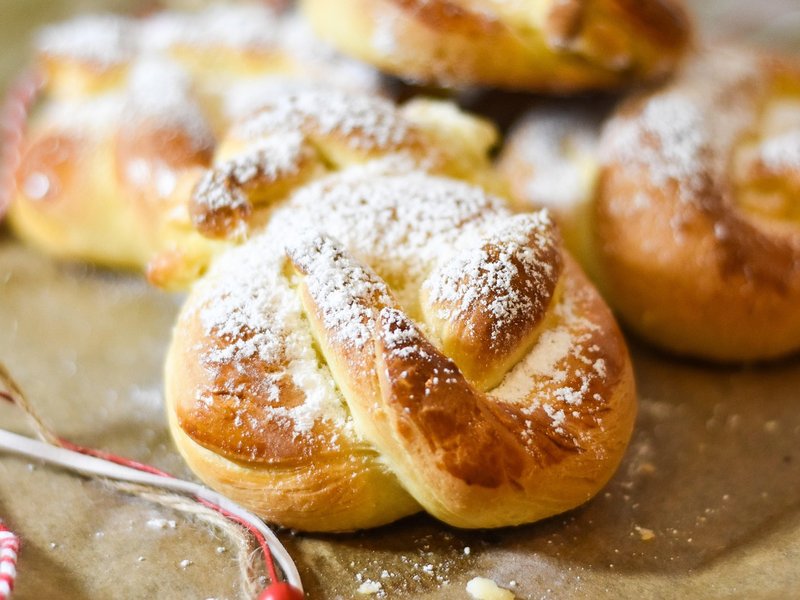
Divide the dough into balls of about 2 oz each: cut it with a bench scraper and roll each piece under your palm into a smooth ball.
💡Put things in the oven only once it's reached temperature, after the heating light has gone off: an oven that hasn't reached temperature changes baking times, and the bake burns outside or stays underbaked.
Powdered sugar: measured in tbsp in this recipe: 1 tbsp = 8 g · 389 kcal per 100 g · More about Powdered sugar →
Tools needed (6) · 🍳 One cooking vessel
Oven· 💡 Workaround, changes the dish: Toaster oven (Fits one small pan; good for small batches) · Air fryer (Small batches only, no runny batters) · Pot (Only for covered stews on the stovetop, no browning on top)
Made it? Tell us how it turned out. Have a question? Ask here, and someone who has made it will answer.
Rate the recipe
📒 My notebook
No saved recipes yet. You can start with this one: "♡ Save this recipe" above.
🔒 Kept in this browser, on this device, and without signing in nothing is sent to us. Another computer or phone has a notebook of its own, and clearing the browsing data deletes it. Sign in with Google to get the same notebook on all your devices.
 🧊 In the fridge📒 Notebook
 Sign in