Take the dough out of the fridge about an hour ahead, covered, so it comes to room temperature and is easy to stretch.
💡Cold dough shrinks back when you stretch it. Room-temperature dough stretches easily into a thin round without tearing.
For the Tomato sauce
2
In a bowl, mix the tomatoes with the salt. Don't cook it: the sauce cooks on the pizza in the oven.
StoveSmall saucepan
💡Spread cooled sauce on pizza: hot sauce softens the dough even before baking.
💡A gentle simmer, not a boil: a hard boil dries the food out and clouds it, a slow simmer cooks it evenly.
To assemble
3
Preheat the oven to 250°C (480°F), with a baking stone inside.
Oven
💡A home oven doesn't reach the heat of a professional pizza oven, but you can get close: preheat the oven to its maximum temperature (250°C+) with a pizza stone or an upside-down baking sheet inside for at least 45 minutes before baking.
💡Put things in the oven only once it's reached temperature, after the heating light has gone off: an oven that hasn't reached temperature changes baking times, and the bake burns outside or stays underbaked.
4
Roll out the dough (or stretch it by hand) into a thin round on a floured surface and transfer to parchment paper.
Rolling pinParchment paper
💡Pizza dough that doesn't shrink: when the dough shrinks back as you roll it, let it rest covered for 5 minutes. The gluten needs to 'relax'. After that it will roll out easily.
💡For crisp homemade pizza dough: after rising, don't roll it out with a rolling pin but stretch it gently by hand. Stretching by hand keeps the air bubbles formed during rising and creates an authentic bubbly crust.
💡Let the pizza dough rise for 24 hours in the fridge (a long cold rise) — the dough develops a deeper flavor and an airy texture with big bubbles.
💡3 cups of flour (about 400 g) make 2–3 thin pizzas: divide the dough into balls before rolling, rather than stretching it all into one thick pizza.
💡Roll from the center outward and give the dough a quarter turn between rolls: this keeps it even in thickness and stops it sticking to the counter. If it springs back, cover for 10–15 minutes and try again.
5
Spread a thin layer of sauce, leaving a 1 cm border.
💡Preheat the oven to its maximum with a baking stone or an upside-down baking sheet. Pizza dough should be at room temperature. Spread a thin layer of sauce - too much sauce will make the dough soggy.
6
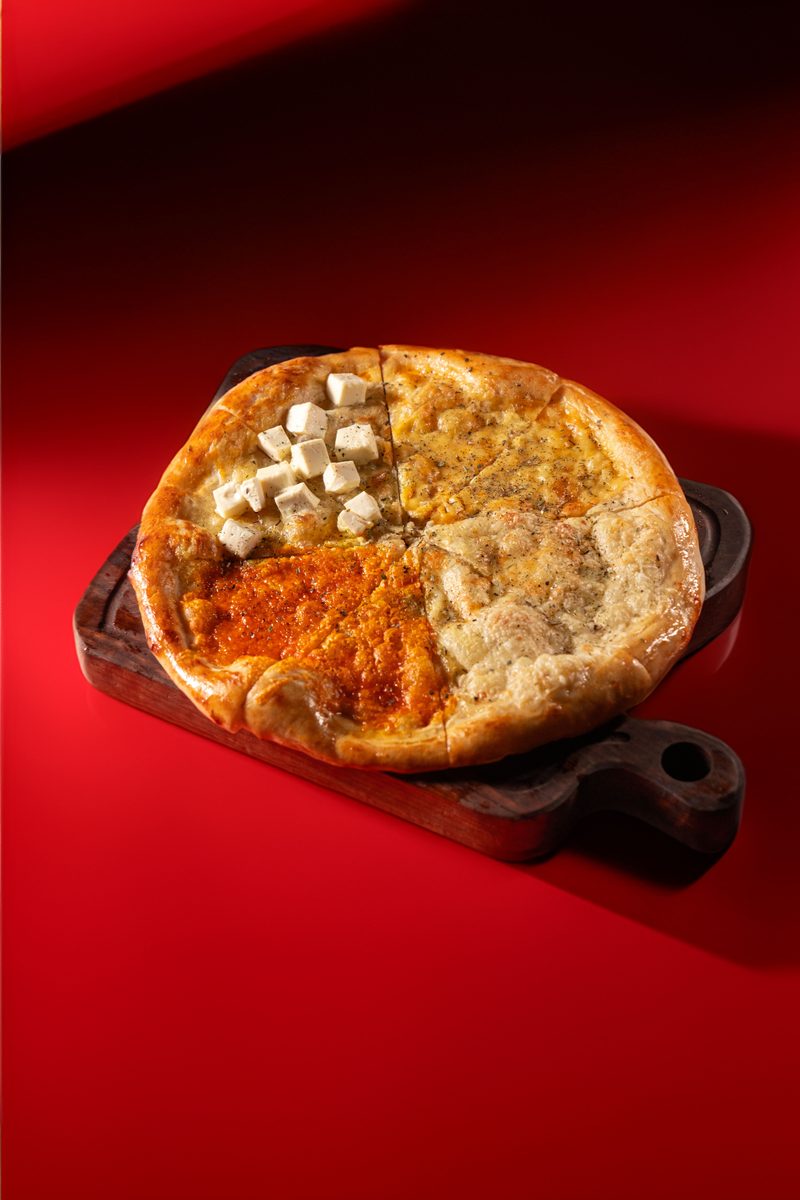
Scatter the mozzarella, additional cheese, gorgonzola, Parmesan and oregano over the top.
7
Drizzle the olive oil over the top.
8
Slide the pizza on its paper onto the hot stone and bake 10–12 minutes, until the edges are golden and the cheese bubbles.
OvenBaking stone (pizza stone)Parchment paper
9
Take out of the oven and add the basil.
225calories
10 gprotein
19 gcarbs
12 gfat
● protein 18%● carbs 34%● fat 49%
Per serving, servings (calculated for this version)
A button hides that part of the recipe, in print too. Another click brings it back. The choice is kept for this recipe.
Oven· 💡 Workaround, changes the dish: Toaster oven (Fits one small pan; good for small batches) · Air fryer (Small batches only, no runny batters) · Pot (Only for covered stews on the stovetop, no browning on top)
Rolling pin· Also works: Glass (for drinking/serving) (Bottle/glass, less even rolling) · Pasta machine (For pasta dough)
Baking stone (pizza stone)· Also works: Baking sheet (Upturned pan, well preheated) · Cast-iron pan (None)
🧻 Consumables: Parchment paper
By the steps, as the recipe is built now: another version or addition can change the list.