Add the lukewarm water and olive oil and Knead about 10 minutes, until the dough is smooth, pliable and doesn't stick to your hands.
BowlStand mixer
💡For yeast dough, use the windowpane test: a small piece stretches into a thin, translucent sheet without tearing, and that's the sign the kneading is done. Add flour only by the tablespoon, and only if the dough is still sticky after a few minutes: too much flour makes a tough dough.
3
Cover and Let rise about an hour in a warm place, until the dough doubles in size.
Plastic wraporKitchen towel
💡Let rise in a warm, draft-free spot. The dough is ready when it has doubled, and a gentle finger press leaves a dent that fills back slowly; if it springs right back, wait longer.
For the Dough base
4
Take the dough out of the fridge about an hour ahead, covered, so it comes to room temperature and is easy to stretch.
💡Cold dough shrinks back when you stretch it. Room-temperature dough stretches easily into a thin round without tearing.
For the Tomato sauce
5
In a bowl, mix the tomatoes with the salt. Don't cook it: the sauce cooks on the pizza in the oven.
StoveSmall saucepan
💡Spread cooled sauce on pizza: hot sauce softens the dough even before baking.
💡A gentle simmer, not a boil: a hard boil dries the food out and clouds it, a slow simmer cooks it evenly.
To assemble
6
Preheat the oven to 250°C (480°F), with a baking stone inside.
Oven
💡A home oven doesn't reach the heat of a professional pizza oven, but you can get close: preheat the oven to its maximum temperature (250°C+) with a pizza stone or an upside-down baking sheet inside for at least 45 minutes before baking.
💡Put things in the oven only once it's reached temperature, after the heating light has gone off: an oven that hasn't reached temperature changes baking times, and the bake burns outside or stays underbaked.
7
Roll out the dough (or stretch it by hand) into a thin round on a floured surface and transfer to parchment paper.
Rolling pinParchment paper
💡Pizza dough that doesn't shrink: when the dough shrinks back as you roll it, let it rest covered for 5 minutes. The gluten needs to 'relax'. After that it will roll out easily.
💡For crisp homemade pizza dough: after rising, don't roll it out with a rolling pin but stretch it gently by hand. Stretching by hand keeps the air bubbles formed during rising and creates an authentic bubbly crust.
💡Let the pizza dough rise for 24 hours in the fridge (a long cold rise) — the dough develops a deeper flavor and an airy texture with big bubbles.
💡3 cups of flour (about 400 g) make 2–3 thin pizzas: divide the dough into balls before rolling, rather than stretching it all into one thick pizza.
💡Roll from the center outward and give the dough a quarter turn between rolls: this keeps it even in thickness and stops it sticking to the counter. If it springs back, cover for 10–15 minutes and try again.
8
Spread a thin layer of sauce, leaving a 1 cm border.
💡Preheat the oven to its maximum with a baking stone or an upside-down baking sheet. Pizza dough should be at room temperature. Spread a thin layer of sauce - too much sauce will make the dough soggy.
9
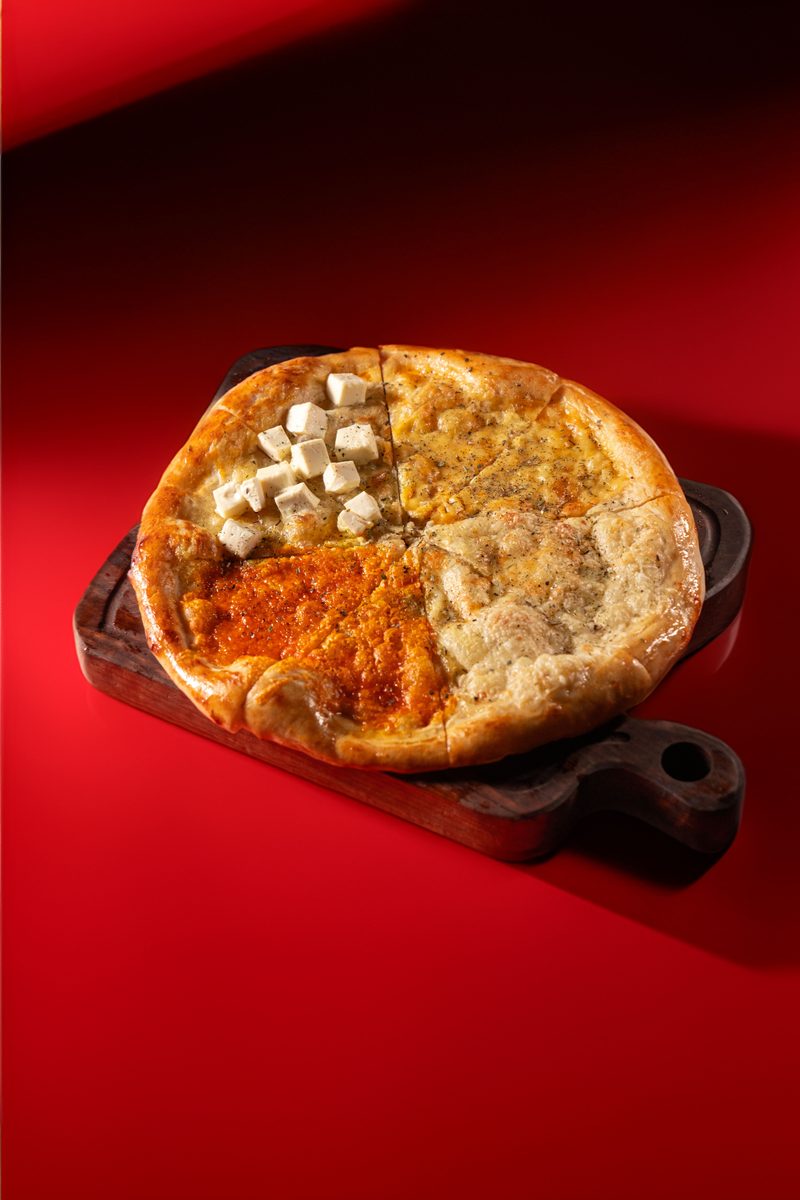
Scatter the mozzarella, additional cheese, gorgonzola, Parmesan and oregano over the top.
10
Drizzle the olive oil over the top.
11
Slide the pizza on its paper onto the hot stone and bake 10–12 minutes, until the edges are golden and the cheese bubbles.
OvenBaking stone (pizza stone)Parchment paper
12
Take out of the oven and add the basil.
201calories
9 gprotein
13 gcarbs
13 gfat
● protein 18%● carbs 26%● fat 56%
Per serving, servings (calculated for this version)
A button hides that part of the recipe, in print too. Another click brings it back. The choice is kept for this recipe.
Oven· 💡 Workaround, changes the dish: Toaster oven (Fits one small pan; good for small batches) · Air fryer (Small batches only, no runny batters) · Pot (Only for covered stews on the stovetop, no browning on top)
Rolling pin· Also works: Glass (for drinking/serving) (Bottle/glass, less even rolling) · Pasta machine (For pasta dough)
Baking stone (pizza stone)· Also works: Baking sheet (Upturned pan, well preheated) · Cast-iron pan (None)
🧻 Consumables: Parchment paper
By the steps, as the recipe is built now: another version or addition can change the list.