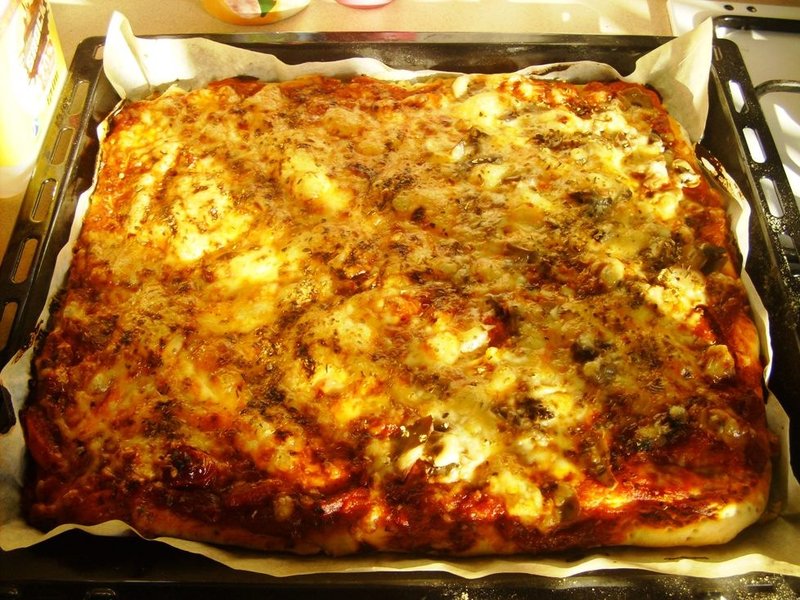
A thick, airy dough that rises twice, once in the bowl and once in the greased pan, so the bottom comes out crisp, almost as if fried. The pepperoni slices curl in the heat into little cups with charred edges, collecting spiced red fat inside them.
💡For yeast dough, use the windowpane test: a small piece stretches into a thin, translucent sheet without tearing, and that's the sign the kneading is done. Add flour only by the tablespoon, and only if the dough is still sticky after a few minutes: too much flour makes a tough dough.
3
Cover and Let rise about an hour in a warm place, until the dough doubles in size.
💡Let rise in a warm, draft-free spot. The dough is ready when it has doubled, and a gentle finger press leaves a dent that fills back slowly; if it springs right back, wait longer.
For the Tomato sauce
4
In a bowl, mix the tomatoes, garlic and oregano with the salt. Don't cook it: the sauce cooks on the pizza in the oven.
With oiled hands, stretch the dough in the pan, to the edges and into the corners, and Let rise another 20 minutes. Meanwhile, preheat the oven to 250°C (480°F).
💡A generous amount of oil in the pan is what gives pan pizza its crisp, almost fried bottom. If the dough springs back as you stretch it, wait 5 minutes for it to relax and continue.
💡Let the pizza dough rise for 24 hours in the fridge (a long cold rise) — the dough develops a deeper flavor and an airy texture with big bubbles.
7
Spread the sauce over all of the dough.
8
Scatter the mozzarella and pepperoni over the top.
Oven· 💡 Workaround, changes the dish: Toaster oven (Fits one small pan; good for small batches) · Air fryer (Small batches only, no runny batters) · Pot (Only for covered stews on the stovetop, no browning on top)
No saved recipes yet. You can start with this one: "♡ Save this recipe" above.
🔒 Kept only in this browser, on this device. No account and no sign-in, and nothing is sent to us. Another computer or phone has a notebook of its own, and clearing the browsing data deletes it.
 🧊 In the fridge📒 Notebook